February 2023 reading digest
You can't have nice things, unless you're Tom Ripley
In February I finally got around to reading lit thriller classic The Talented Mr. Ripley by Patricia Highsmith, the excellent WW1 novel Regeneration by Pat Barker, the extremely grim but also quite funny Sentimental Education by Gustave Flaubert, and debut novel Briefly, A Delicious Life by Nell Stevens.
The Talented Mr. Ripley by Patricia Highsmith (1955)
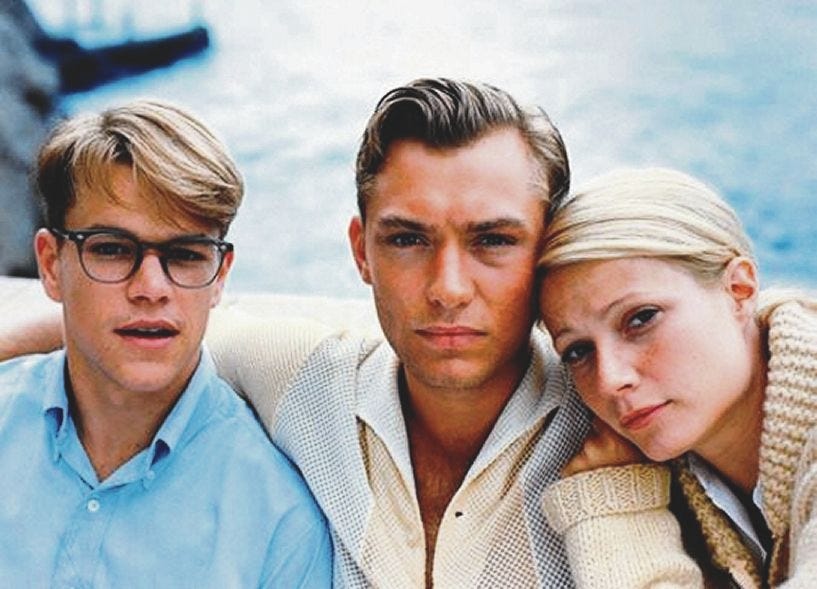
I’ve had this on my shelf for a long time and it was a real treat to finally get around to reading it. This is the first piece of work by Highsmith I’ve read, though her reputation precedes her - most notably in that she was a pretty grouchy lesbian who nurtured many pet snails which she often carried around in her handbag and that she also wrote The Price of Salt, the novel that the excellent film Carol is based on. I don’t normally read thrillers or crime fiction because plot-heavy novels don’t always do it for me. No matter the genre, though, I love a character deep-dive and this is primarily what The Talented Mr. Ripley delivers.
First of all it is very homoerotic. This is just a very gay and lusty novel and whether you see this as a contribution to the ‘homosexual villain’ trope is up to you but honestly I just thought it was Reflecting Its Time and that it’s probably okay because Highsmith isn’t exactly exalting homophobia, either. The homophobic characters are many and varied and never are they portrayed in a particularly flattering light. Nobody is! Everybody is having a pretty bad time of it in this novel except for Dickie Greenleaf, the original himbo, so dumb and hot and rich that Tom Ripley decides to steal his identity (not really a spoiler as this novel AND two movie adaptations have been around since 1955). And you want him to get away with it! How does Highsmith do this - make you root for a heinous criminal and sociopathic conman? Is it because everyone else around him sucks? Because, growing up in foster homes after the drowning death of his parents, he never stood a chance? Because he’s actually quite relatably neurotic? Take this striking passage for example, where Highsmith details how Ripley suffers from depersonalisation/derealisation after Dickie chides him for trying to draw him into inappropriate hijinks:
“Now Tom stopped. He had an impulse to go back, not necessarily to go back to the Italian, but to leave Dickie. Then his tension snapped suddenly. His shoulders relaxed, aching, and his breath began to come fast, through his mouth. He wanted to say at least, ‘All right Dickie,’ to make it up, to make Dickie forget it. He felt tongue-tied. He stared at Dickie’s blue eyes that were still frowning, the sun bleached eyebrows white and the eyes themselves shining and empty, nothing but little pieces of blue jelly with a black dot in them, meaningless, without relation to him. You were supposed to see the soul through the eyes, to see love through the eyes, the one place you could look at another human being and see what really went on inside, and in Dickie’s eyes Tom saw nothing more now than he would have seen if he had looked at the hard, bloodless surface of a mirror. Tom felt a painful wrench in his breast, and he covered his face with his hands. It was as if Dickie had been suddenly snatched away from him. They were not friends. They didn’t know each other. It struck Tom like a horrible truth, true for all time, true for the people he had known in the past and for those he would know in the future: each had stood and would stand before him, and he would know time and time again that he would never know them, and the worst was that there would always be the illusion, for a time, that he did know them, and that he and they were completely in harmony and alike. For an instant the wordless shock of his realization seemed more than he could bear. He felt in the grip of a fit, as if he would fall to the ground. It was too much: the foreignness around him, the different language, this failure, and the fact that Dickie hated him. He felt surrounded by strangeness, by hostility.” (p. 78 in my edition)
I’ve felt a version of this before. I really have. I remember being in Paris in 2015 and seeing an ugly cluster of garbage float down the Seine and felt so alienated and overwhelmed suddenly that I just wanted to to sink into the grass forever. Albeit I wasn’t also scheming to either possess or murder the object of my fantasises - it’s just that feeling this way happens to some people to different degrees and I suppose we all do different things to cope with it. It’s also in this sense that I think Mr. Ripley appeals to our age of therapy-speak: it’s so easy to diagnose him as a repressed sociopath, or to explain away his crimes as a result of his foster care upbringing and the trauma of living in such a homophobic society. Perhaps this is always what Highsmith’s readers have intuited about Ripley, and why there is such glee in seeing him get away with it all. But I think this somewhat strips the novel of its Freudian power to point its finger back at the reader and ask: what would you do if you knew you might get away with it - if you knew you might be clever enough? Why do we excuse and root for Ripley, but not others whose crimes can be ‘explained’? These questions disturb me a bit and perhaps have a tinge of ‘it’s not that deep’ yet are one of the reasons this book is so good.
Briefly, A Delicious Life by Nell Stevens (2022)
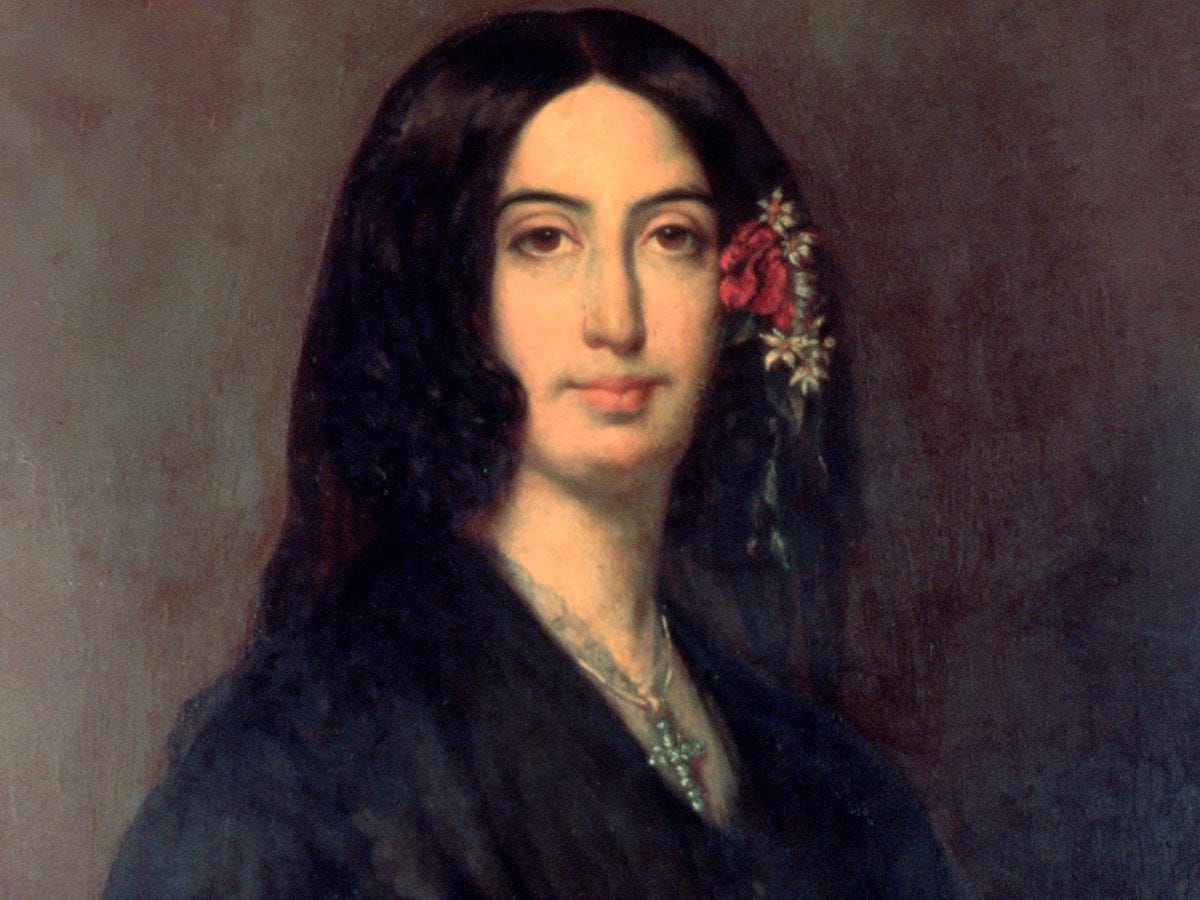
I snatched this one from the library very eager to read it based on its plot: the ghost of a teenage girl who died in the 15th century falls madly in love with the writer George Sand when the latter visits Mallorca in the late 1800s with her sickly lover Frederic Chopin (who else?). It fell quite a way below my expectations. For a novel that could have been so radical and surprising, I found it too smooth around the edges - almost as if it were initially written for the YA market. I really balk when reviewers criticise a book because it wasn’t the version of the book they wanted it to be, but I’m going to lean a bit into that here and say it could have been a lot better than it was. It somehow remains pretty surface level despite offering multiple deep-dive POVs through Blanca (the girlghost) perhaps because it is overstuffed with these threads, yet leaves a lot unsatisfyingly unanswered - most of all the reason why Blanca is stuck in some sort of limbo in the first place. I was left having to assume that it was because the author just thought it was kind of neat. There are also a few unwieldy descriptions of Chopin’s piano compositions which may have worked for some readers, but, being unfamiliar with his body of work and unwilling to listen to the specific pieces for the sake of understanding these quite flowery descriptions, I found jarring. That one’s on me I guess!
But my most pressing issue with this novel has nothing to do with structure or POV or plot, but a single word choice: about halfway through, the smell of sex is described as “biscuity” - at which point I almost put the book down and walked slowly into the sea to die. I can’t recommend this one.
Regeneration by Pat Barker (1991)
After reading Briefly, A Delicious Life, I needed to inhale a good novel. In a bit of a fever to find one I grabbed Regeneration off my bookshelf, remembering how solid I found Barker’s more recent Silence of the Girls. Regeneration follows army psychiatrist William Rivers during WWI as he treats soldiers sent to him for shell-shock and other ‘diseases’ of the male mind during wartime. It features the war poets Siegfried Sassoon and Wilfred Owen alongside invented characters like Billy Prior (who the next book in this trilogy follows), all of whom Rivers treats at the Scottish war hospital Craiglockhart. So this is a war novel, and an excellent one at that, but it’s also a novel that deeply interrogates the harms of entrenched gender stereotypes. As later research would show, Barker has Rivers connect the dots between soldiers with PTSD and women who are confined to the home:
“This reinforced Rivers’ view that it was prolonged strain, immobility and helplessness that did the damage, and not the sudden shocks or bizarre horrors that the patients themselves were inclined to point to as the explanation for their condition. That would help to account for the greater prevalence of anxiety neuroses and hysterical disorders in women in peacetime, since their relatively more confined lives gave them fewer opportunities of reacting to stress in active and constructive ways. Any explanation of war neurosis must account for the fact that this apparently intensely masculine life of war and danger and hardship produced in men the same disorders that women suffered from in peace.” (p. 297-298)
I was struck by the way Barker wrote of the grim irony of WWI, that a generation of men were convinced to go on the great manly adventure they’d always dreamed of only to become aggressively ‘feminised’ by the experience:
“Rivers had often been touched by the way in which young men, some of them not yet twenty, spoke about feeling like fathers to their men. Though when you looked at what they did. Worrying about socks, boots, blisters, food, hot drinks. And that perpetually harried expression of theirs. Rivers had only ever seen that look in one other place: in the public wards of hospitals, on the faces of women who, in their early thirties, could easily be taken for fifty or more. It was the look of people who are totally responsible for lives they have no power to save. One of the paradoxes of the war - one of the many - was that this most brutal of conflicts should set up a relationship between officers and men that was… domestic. Caring … maternal. And that wasn’t the only trick the war had played. Mobilization. The Great Adventure. They’d been mobilized into holes in the ground so constricted they could hardly move. And the Great Adventure - the real life equivalent to all the adventure stories they’d devoured as boys - consisted of crouching in a dugout, waiting to be killed. the war that had promised so much in the way of ‘manly’ activity had actually delivered ‘feminine’ passivity, and on a scale that their mothers and sisters had scarcely known. No wonder they broke down.” (p. 146)
This reminded me of the most affecting scene in the new adaptation of All Quiet on the Western Front, toward the very beginning when the young men are cheering and hollering for the pro-war rhetoric of the older men (who, in the book, Remarque makes clear have never experienced war themselves), excited and riled up for the patriotic adventure of their lives where most of them would go to die.
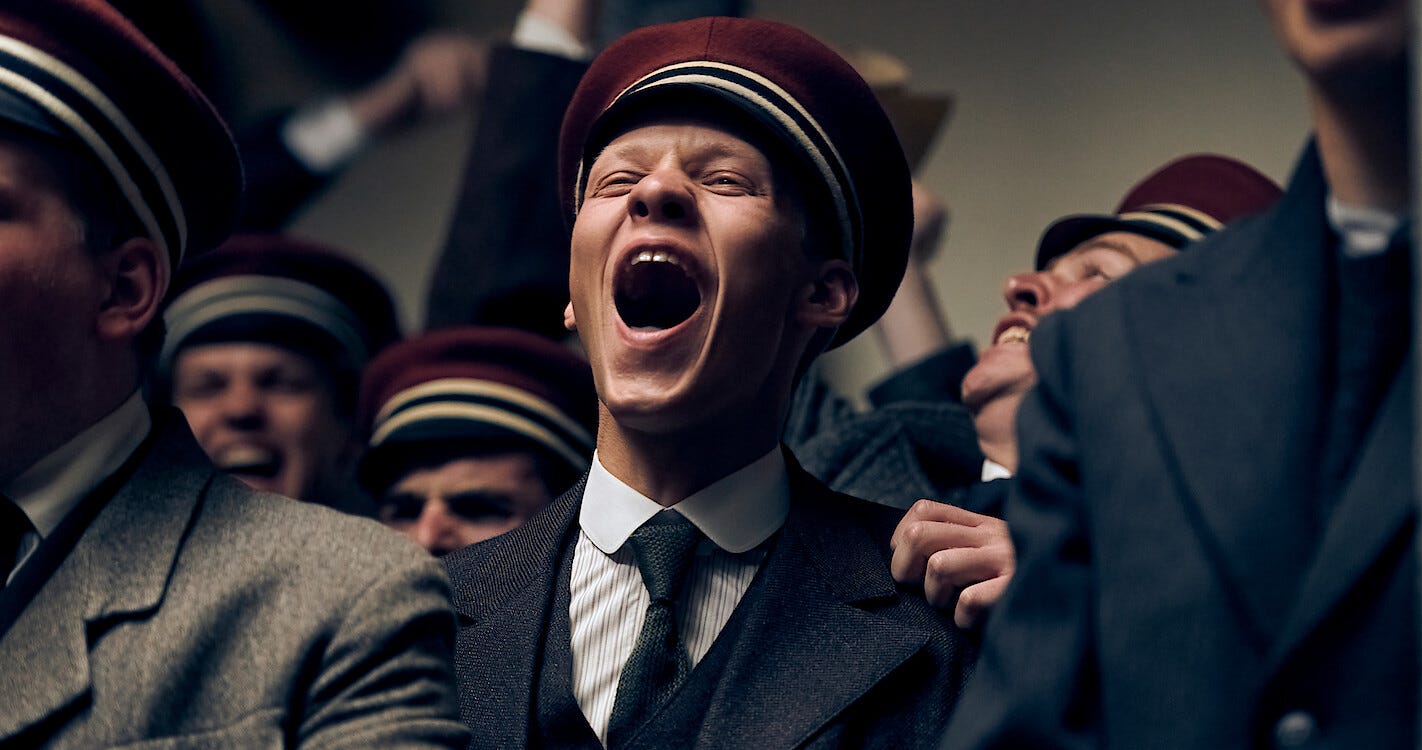
Can’t wait to read the next two in the trilogy!
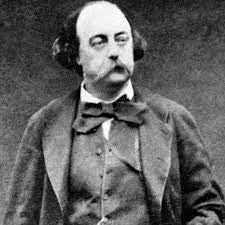
Sentimental Education by Gustave Flaubert (1869)
I saw this recommended somewhere long ago (the reasons I’m drawn to certain books often turn out to be intractable mysteries) and so grabbed at it when I saw it at a secondhand bookshop earlier this month. I was most struck by how well Flaubert depicts the difficulty of clearly understanding your own life, and by his (seeming) conviction that we mostly act and form political opinions out of our own self-interest. Sentimental Education follows the adult life of Frederic Moreau during the 1848 French Revolution and the founding of the Second French Empire as he sulkily moves through different social milieus, squanders his inheritance(s), and harbours a decades-long secret fantasy life dominated by the wife of an older friend, one Madame Arnoux. The main characters in this novel - Frederic and his friend Charles Deslauriers - writes Michael Wood, “misunderstand their lives, but they do it with elegant clarity, and they do it together, entirely on the same deluded wavelength”. Sound familiar?
Yeah. I felt attacked by Sentimental Education quite early on and this - Flaubert’s pointed finger - held me in a kind of tension until the very end, as if Frederic’s fate was somehow my very own. Would he change his avoidant ways? Would he stop procrastinating and fantasising about the unattainable? Would he stop being a dickhead? Would he accept that he needs a real job at some point? These, I guess, are the questions of a typical coming-of-age novel, really - and you can expect Flaubert to have subverted an entire genre before the name for it was even invented (probably).
I understand old Gustave wrote this novel to skewer the specifically empty politics of his time, but it all rings alarmingly true to me in 2023. Frederic moves through the salons of progressive crowds and the more formal events of the conservartive moneyed and both sound so like conversations you’d hear today, including the way that time acts on the opinions and stances spouted in these conversations to reveal them as changeable as the winds, dependent on one’s fortunes or lack thereof, or if there is anybody hot present. Politics in this novel is a nasty business. Romance is just as susceptible to Flaubert’s jaded pen, and doesn’t seem super possible with all the money concerns everyone has - but you know Frederic still tries. And tries. Until he finally does get what he’s been wanting for almost the entire book and - to say anything else would be a spoiler. You should read this. It helped me understand both myself a little better - my tendency to romanticise my life and my past will never help me, will it? - and the times, which are always timing, which is why this book holds up, and why we can’t have nice things.